
The more I read Breakpoint: The Crisis of the Middle Class and the Future of Work, the clearer one thing feels: AI isn’t just coming for factory workers or low‑skill jobs. It’s quietly eating the “good” white‑collar work that degrees used to guarantee.
This week’s story zooms in on a simple shift Saurabh highlights: in fields like finance and education, the money is moving away from the people who run the models and towards the people who can still move humans.
Don’t Automate the Rainmaker
Imagine two young professionals in finance.
One becomes a fund manager, buried in research reports, models, and market data. The other goes into client-facing sales, sitting across tables from families and founders, persuading them to trust a particular fund with their life savings. For a long time, the prestige – and the pay – flowed to the person “running the money,” not the one “selling the money.”
AI is quietly inverting that.
Saurabh makes a simple observation: it is entirely plausible that an AI system can run a diversified Indian equity fund better than most human managers. Algorithms can scan more data, adjust faster, and stay unemotional. But that same system cannot yet walk into a multi‑millionaire’s home in Hyderabad, read the room, handle the subtle status games, soothe fears about volatility, and persuade them to wire $1 million into a new fund.
The manufacturing of financial products is getting automated. The selling of those products – the human, high‑trust, high‑stakes part – is where the value will pool.
The same pattern shows up in education. In the classroom of the near future, AI can grade homework, set custom practice questions, and even explain concepts at different difficulty levels. But it can’t look a restless 17‑year‑old in the eye and say, “I know you’re capable of more” in a way that lands. It can’t run a messy group project that teaches conflict resolution and leadership. So the teacher’s job migrates: less marking, more mentoring.
These are not small tweaks. They’re role rewrites.
For founders and senior operators, the mistake is to think, “AI will replace junior people, but my world stays the same.” In reality, AI is hollowing out entire layers of “respectable” cognitive work: analysts who mostly rearrange data, managers who mostly update decks, professionals whose day is spent inside tools rather than with people.
At the same time, it is amplifying the people who can do what AI can’t: hold trust, frame decisions, absorb complexity, and move others to act.
If you run a business, your leverage is no longer “we have smart people running spreadsheets.” Everyone will have that. Your leverage becomes: “we have machines doing the grunt work, and humans doing what only humans can do – selling, coaching, leading, solving weird problems in real time.”
The uncomfortable question is not “Will AI take my job?” It’s “Is most of my day spent on things a decent model could do cheaper, or on things that require trust, taste, and judgement?”
One side gets commoditized. The other gets paid.
Lessons
Production gets automated; persuasion gets rewarded.
In fields like finance and education, the “making” of the product is getting handed to algorithms, while the hard, messy work of earning and keeping human trust is becoming the scarce, expensive part.Tasks are automated, not entire roles – unless you cling to the wrong tasks.
If your identity is tied to grinding through analysis, not to guiding decisions, AI won’t just “help” you. It will quietly make you irrelevant.The most resilient careers sit at the intersection of brains and relationships.
People who can understand complex systems and explain them simply to non‑experts will capture more value than those who only do one side.Founders should use AI to free, not replace, their best people.
The win is not cutting your top salesperson; it’s taking 30–50% of their low‑leverage work and giving it to a machine so they spend more time in front of humans.
On Monday, do this
Audit your own calendar for “AI‑bait.”
Look at last week. Highlight every block that was data gathering, formatting, summarising, or basic follow‑ups. Ask: “Could a tool do 80% of this?” If yes, start testing one this month.Redraw one key role around human‑only skills.
Pick a role like sales, account management, or teaching. List the tasks that require trust, persuasion, or coaching. Explicitly redesign the role so that person spends more time on those, less on admin.Change your next hire’s spec.
For your next knowledge‑worker hire, add one non‑negotiable: evidence they can move humans, not just move information. That might be sales experience, teaching, community building, or leading teams.Design one “AI shield” for yourself.
Choose one human skill you’ll deepen over the next 12–24 months – e.g., high‑ticket sales, storytelling, negotiation, or coaching. Treat it as your personal hedge against being automated away.
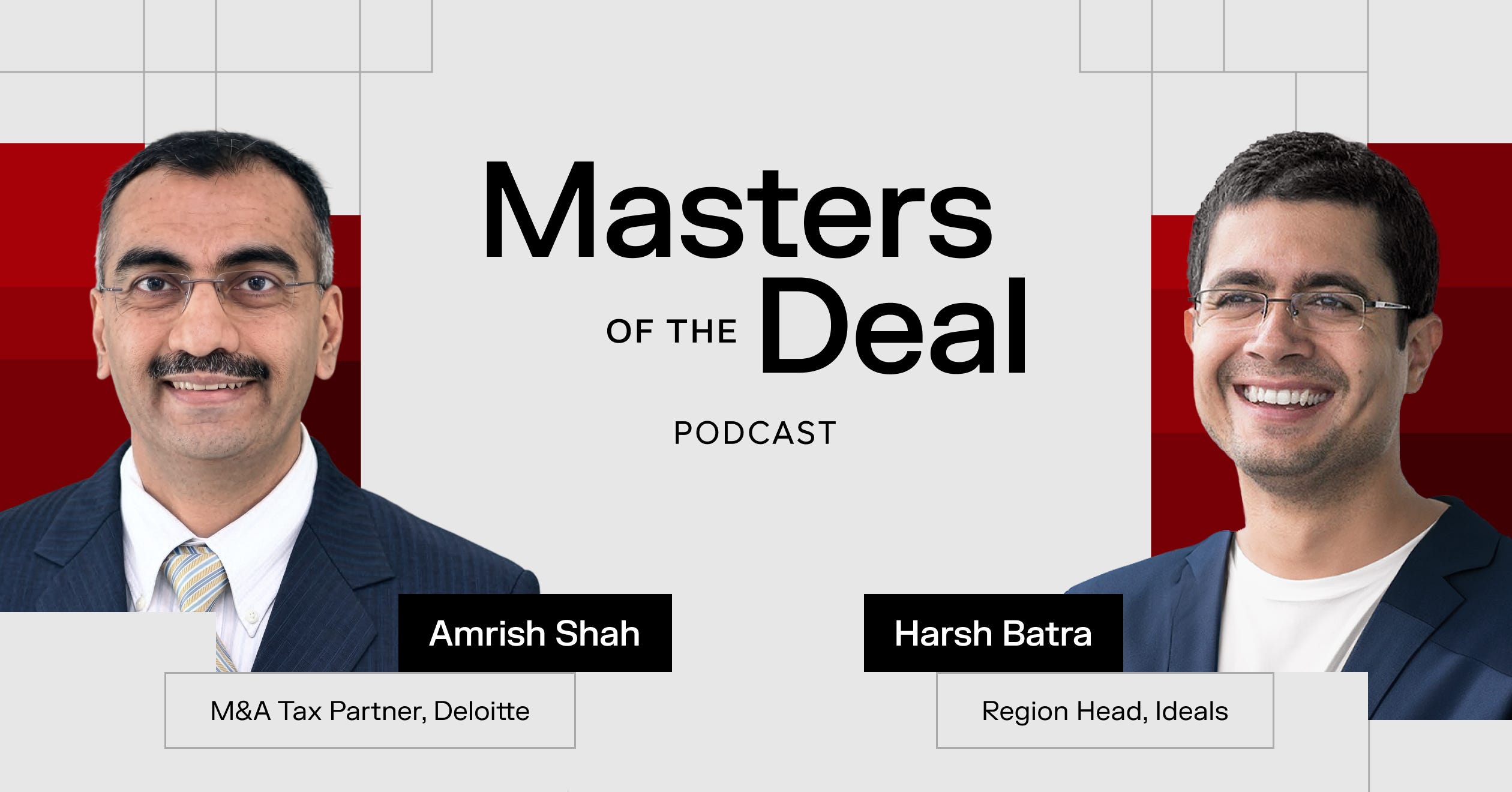
P.S. If you enjoy seeing how real careers and leadership styles are built over decades, I recently spoke with Amrish Shah, Partner at Deloitte and a 37‑year veteran of India’s M&A tax landscape. We got into mentors, long-term client relationships, and how creative structuring turns a standard deal into a win‑win. You can listen here: mnacommunity.com/podcasts/amrish-shah/

If this was forwarded to you
I’m Harsh. I build businesses with extraordinary people. I’m helping grow Ideals Virtual Data Rooms, I am bootstrapping a food startup and I invest through Marcellus Investment Managers. I send one email each Sunday for founders and senior operators who want useful ideas to win in business and life. If that’s you, you can join the newsletter here. Connect with me on LinkedIn here.